

I love teaching codes
Glenn GA Mathewson
GET TO KNOW YOUR INSTRUCTOR
The minimum line of code is the same as the maximum line of freedom
-Glenn Mathewson
LIVE TRAINING AVAILABLE, IN-PERSON OR ONLINE
Available Classes & Schedule
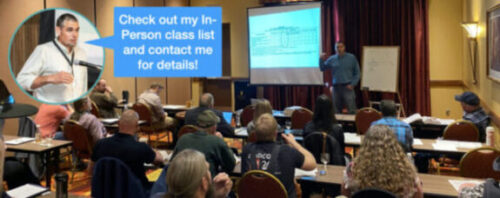
On-Demand Courses at BCC are a great way to learn, but I also love teaching live, whether onsite and in-person or in a webinar. Check out my complete list of full- and half-day classes
– CREDENTIALS –
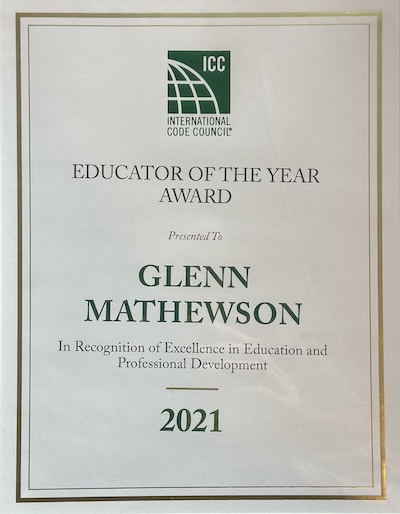
ICC Educator of the Year
I was awarded this in 2021
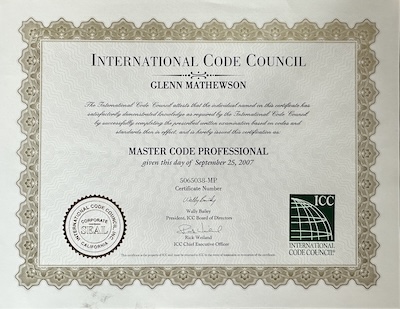
ICC Master Code Professional
I earned this recognition in 2007
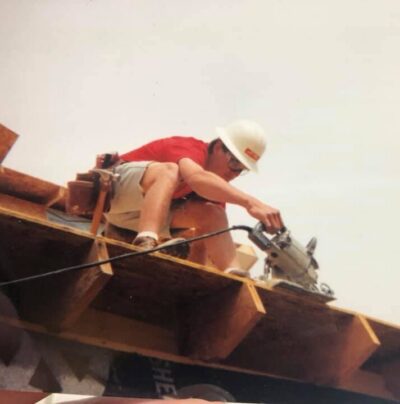
Trades Experience
I started as a 19-yr old laborer
– ARTICLES & BLOGS –
Journal of Light Construction
I wrote for the JLC and Professional Deck Builder for many years. Visit my author page to read some of them.
Fine Homebuilding
I’ve been writing the regular column, Know the Code, since 2018. You can read them all online at my author page.
North American Deck & Railing Association
I represented the deck industry in the 2015 to 2024 IRC code development.
– BOOKS –
Deck Construction – 2021
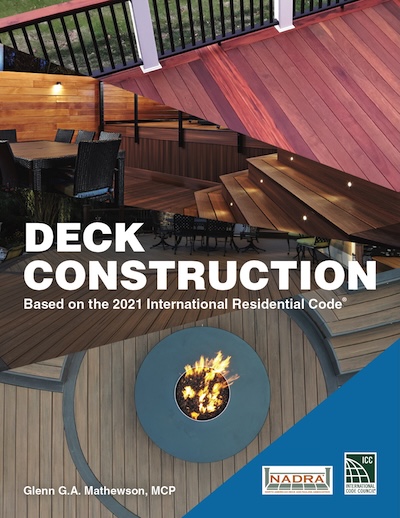
I write a deck code and construction book published by the International Code Council.
Code Check – 2021
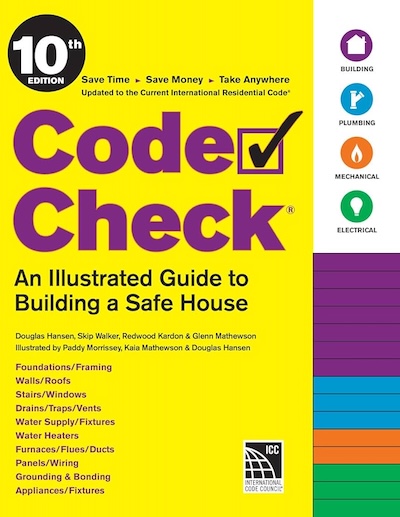
I’m a new author for Code Check, a popular code education publication that has been around since the 90’s.
2024 IRC Essentials
I authored the 2024 edition of the International Code Council’s popular book, The IRC Essentials.
MY CONSTRUCTION STORY
The builder years
I started my construction career in 1996 at age 19, when I left an assistant manager job at a movie theater to become a laborer for a turnkey framing contractor. The job quickly progressed into completing punch list items and inspection corrections, building decks, framing basements, repairing siding, and basically fixing any other issues necessary to keep the crews moving and the shells turning over to the homebuilder. In 1998, I became a subcontractor, framed several homes, built a lot of tract-home decks, and then started marketing custom decks to homeowners under Mathewson Carpentry. I later merged my company into a friend’s stronger brand, Highpoint Decks, and kept designing, selling, and building until 2005.
From decks to code
I was building the most elaborate deck of my career when I decided I wanted to do something different. I had two children under three and another in planning, and I wanted a steady income with good benefits. I didn’t want to do sales calls in the evenings anymore. In 2005, after earning three ICC inspection certifications and spending a week on a ride-along with a local inspector for experience, I got a position as a building, plumbing, and mechanical inspector for the City of Westminster, Colorado. It was quite overwhelming to suddenly be working as a colleague with inspectors whose approval I had become accustomed to seeking. Of course, as a newbie, I continued to seek their approval.
Becoming an inspector
I was lucky to have great mentors and leaders at the city who helped shape me into an inspector. They trusted me to handle new situations and construction applications so I could take what I was learning in the code books and find the intent and purpose. As the newbie, I handled all the roof inspections and most of the crawl-space furnace replacements, but the City also invested in me with education and certifications. In my first two years on the job, I earned 17 different ICC certifications, and I was only the second in the state of Colorado to earn the Master Code Professional Certification. Between two five-year assignments as an inspector, I also spent three years as a plan reviewer.
Becoming a teacher
In 2007, with two years of experience, I decided to act on something I noticed: deck builders didn’t understand codes, and the inspectors they were counting on did not understand decks. I decided to be a bridge. That spring, I taught my first Building Codes for Building Decks class under the 2006 IRC at the Deck Superstore, my previous supplier. I’ve taught at their contractor expo nearly every year since. I also reached out to the editor of Professional Deck Builder (a trade journal I received as a builder) and suggested that building codes should be presented positively and proactively to builders. Soon after, they published my first article about decks and safety glazing codes. I’ve since written over 70 articles for that journal and its parent publication, the Journal of Light Construction. Drawing confidence from these speaking and writing opportunities, I later published in the ICC Building Safety Journal and began my own column in Fine Homebuilding magazine in 2018, Know the Code. In 2009, I approached the International Code Council with an idea to write a deck code book that reprints the IRC provisions along with commentary and illustrations. The goal was to provide deck industry professionals with a focused education resource while also helping the code industry better understand deck applications. Deck Construction based on the 2009 IRC was published soon after. I wrote a second edition, based on the 2018 and 2021 codes, that was published in summer of 2021.
Code consulting begins
In 2011, the North American Deck and Railing Association (NADRA) recognized my industry contributions with a contracted position as their technical advisor. In that role, I assist the association and its members with code issues and education. We developed the nation’s first deck code certification: the Master Deck Professional—Codes and Standards. In 2013, I carried the deck industry’s voice to the 2015 IRC code-development hearings, and again for the 2021, and 2024 editions. I continue today, on behalf of myself, to participate in IRC code development. For my consistent dedication to the deck industry, I have twice been awarded the NADRA Terry Award for outstanding contributions to the deck and railing industry.
BuildingCodeCollege.com expands the audience
To make deck code education and the NADRA certification more accessible, I began developing an online education platform in 2012, launching BuildingCodeCollege.com later that year. While the original site included only four deck courses, the long-term mission was broader: a hub of independent instructors across disciplines using a profit-sharing model to provide low-cost, 24/7/365 education through and annual all-you-can learn format for the entire construction industry. targeting the entire construction industry. That mission continues today, with 13 IRC-based courses and more in development.
Going all in
In Spring of 2018, after 13 years with the City of Westminster and 11 years of side consulting and teaching, I left municipal service to commit full-time to education, consulting, and BuildingCodeCollege.com. While my focus remains BCC, I also provide technical review, training, code-adoption support and consulting to various organizations and government clients. I served on Denver’s code-adoption consulting team in 2019 and 2021. I teach for ICC chapters and trade events nationwide, both live and online. Drawing on experience as a tradesman, contractor, plan reviewer, consultant, and building inspector, I teach construction standards with practical awareness of field realities.
Looking to the future
My core mission remains BuildingCodeCollege.com. While the pandemic disrupted traditional training models, it also accelerated mainstream demand for online code education, reinforcing the value of independent, affordable, always-available instruction. I continue to seek reputable independent instructors who share this mission. To support the work, I remain available for consulting, technical review, and instruction where needed. I also preserve vintage code books (now more than 800 volumes) to deepen understanding of modern code intent and history.